

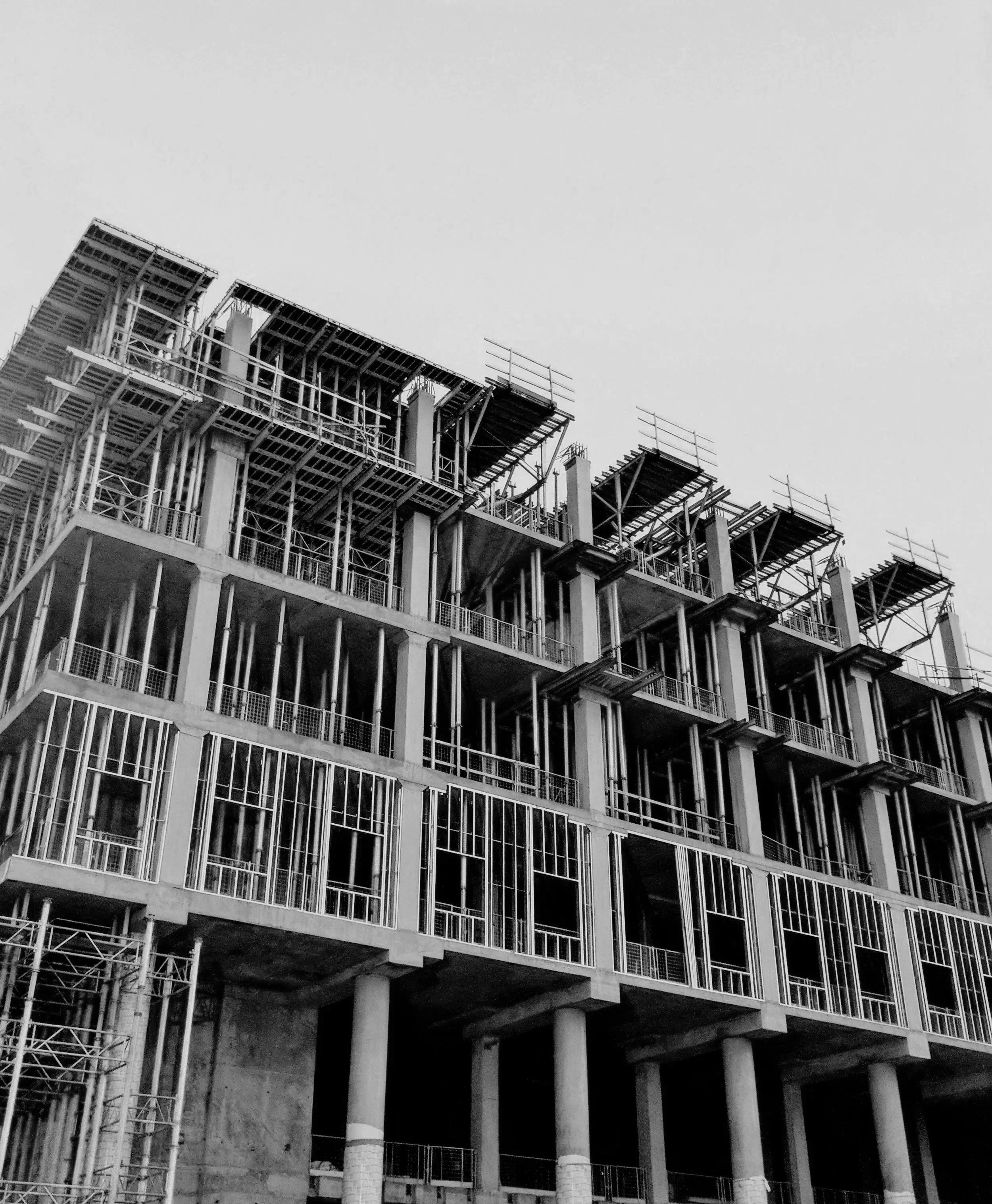
Structural Engineering
We conduct forensic investigations covering a wide range of issues arising in structures of many types and materials:
-
Residential buildings – detached and semi-detached houses, apartment buildings, high-rise structures.
Commercial buildings – low and high-rise office buildings, bussiness parks, hotels, warehouses.
Retail buildings – shopping centres, retail parks, showrooms and exhibition centres, multi-storey car-parks.
Industrial structures – warehouses, factories, storage facilities, heavy-duty paved areas, storage yards.
Transport facilities – airport terminals, bus and railway station buildings.
Leisure & entertainment – cinemas, theatres and concert venues, stadia, sports centres, swimming pools.
Health & education – hospitals, clinics, schools, university buildings, libraries.
Bridges – reinforced or prestressed concrete, steel, composite, masonry arch bridges.
Refurbishments – repair and conversion of existing structures of all sectors. Conservation of buildings with listed features.
-
Concrete – structures or structural components made by plain, reinforced or prestressed concrete, precast or in-situ, such as residential buildings, highway bridges, retaining walls or storage yard pavements.
Steel – structures comprising pre-fabricated steel members erected and assembled on site, such as buildings with large open plan areas (offices, warehouses, industrial structures), large roof structures, high-rise buildings, transmission towers and others.
Masonry – traditional load bearing stone, brick and blockwork construction, commonly used in low rise buildings, heritage structures, arch bridges, chimneys.
Timber – typically found in modestly sized roof structures of residential and commercial buildings, but also in modern engineered timber buildings and sports facilities, as well as temporary structures.
Composites & other materials – carbon fibre-reinforced polymers (CFRP) for strengthening solutions, structural glass and others.
-
Concrete – concrete strength, adequacy of reinforcement, deflection, water ingress, cracking, corrosion, deterioration, settlement, creep, chemical attack, fire resistance, movement joints, precast concrete members, specification of materials.
Steel – member and connection failures, welds and bolts issues, deflection, buckling, footfall, machinery or wind-induced vibrations, fabrication and erection tolerances, fatigue, fire resistance, specification of materials.
Masonry – load capacity assessment, specification, cracking, movement joints, stability.
Timber – specification, bracing and stability, load capacity, deflection, connection design, vibration, joint detailing, durability, fire resistance.
Roles and responsibilities – duties of designers, contractors and sub-contactors, standard of skill and care and standard practice.
Code compliance –assessing compliance with codes of practice and building regulations.
Health and safety during construction works – investigating the root cause(s) of collapse or partial collapse of structure during construction works, H&S incidents, temporary works, construction sequence, scaffolding.
Workmanship – tolerances, construction defects.
Remedial works – assessing need for remedial works, adequacy of remedial schemes prepared by others, devising remedial solutions.
Superstructure – investigating the causes of collapse or partial collapse, stability assessment, wind-induced damage, cracking, excessive deflection, concerns over the adequacy of design, concerns over the quality of workmanship.
Foundations – design, workmaship, excessive movement, cracking, material quantities, tolerances.
Basements – water ingress, heave, settlement, cracking.
Paved areas – cracking, settlement, fatigue, drainage.
Facades – assessing structural systems, fixings, wind induced damage, responsibilities.
Contact us to discuss your needs or request further information.
Structural Engineering

Civil Engineering

Dispute Resolution
& Litigation Support
Technical Consultation